
Read Evans County Deed Records by Type
The GSCCCA instrument menu splits filings into categories: transfers, security deeds, liens, releases, easements, tax-sale papers, and court-related instruments. Ask first what a document was meant to do. A deed transfers the interest its own text describes. A security deed or lien can burden the land without moving ownership at all.
| Deed Type | What It Does | Common Use |
|---|---|---|
| Warranty deed | Conveys the stated interest with deed warranties | Ordinary sale |
| Quitclaim deed | Conveys whatever interest the grantor has, if any | Changing a claimed interest |
| Deed from estate | Transfers under a representative's authority | Probate transfer |
| Trustee's or sheriff's deed | Records a transfer under stated legal authority | Foreclosure or court process |
| Tax-sale deed | Records a tax-sale transaction | Delinquent-tax trail |
Read the image and the later filings, not just the label. Labels can mislead. A tax deed, foreclosure deed, or estate deed may depend on notices, orders, redemption papers, releases, and prior instruments before its place in the chain becomes clear.
The Evans County Recorded-Deed Office
The Evans County Clerk of Superior Court, Sheila S. Blackburn, keeps real-estate filings at 123 W Main Street in Claxton. The official directory lists deeds, liens, plats, FiFAs, and UCC work among the office's functions. Staff do not run phone-in or write-in searches. Use the online index or research at the counter.
The official Evans Clerk directory provides current office details. Call ahead to confirm access logistics. Arrive with names, dates, instrument types, and book/page clues rather than asking staff to build a title chain for you.
Search Fields for Evans County Deeds
The statewide search interface narrows to Evans County. Its controls cover party role, instrument category, county, name, and date parameters, along with several display options for results.
| Field | Use | Caution |
|---|---|---|
| Party Type | Separate grantors and grantees | Role depends on instrument |
| Instrument Type | Narrow to deed, lien, release, or easement | Run more than one type when needed |
| County | Set to Evans | Earlier land may need predecessor counties |
| Name | Enter person, estate, trust, or entity | Test supported variants |
| Date range | Focus a transfer period | Execution and recording dates differ |
The GSCCCA name-search screen is the official entry point.
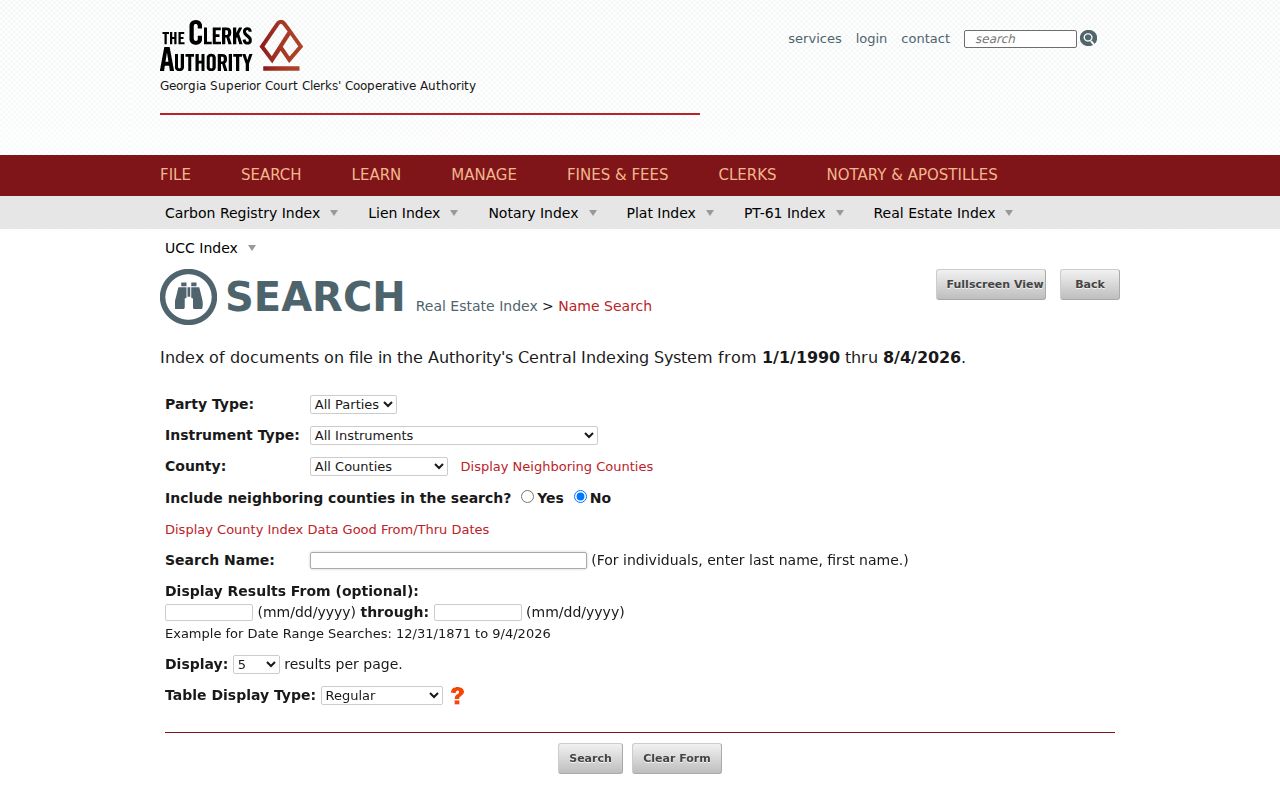
Filters find candidates; images and legal descriptions identify the land.
Walk the Evans Grantor-Grantee Chain
A chain search works backward one acquisition at a time. Keep the land identity fixed by copying the legal description, plat reference, and prior deed citation from every image you open.
- Search the tax-roll owner as a grantee in Evans County and locate the latest plausible acquisition deed.
- Transcribe grantor, grantee, dates, type, book/page or instrument number, and legal description.
- Search that grantor as a grantee in an earlier period, accounting for joint owners, trusts, estates, and entities.
- Repeat to the online boundary, then ask for older grantor/grantee indexes and deed books.
- Grantor
- The party shown as transferring an interest.
- Grantee
- The party shown as receiving an interest.
- Chain of title
- The linked sequence of instruments affecting the same land.
- Book/page
- A recorded-document location that may also point to prior deeds and plats.
Evans Deed Records Begin Online in 1915
The GSCCCA keeps a county-specific good-through page. It gives January 1, 1915 as the start of the Evans index. A Clerk notice says deeds and plats from 1915 forward are online. That date marks an access boundary. It does not mean earlier books were lost. The Evans coverage page shows current index dates.
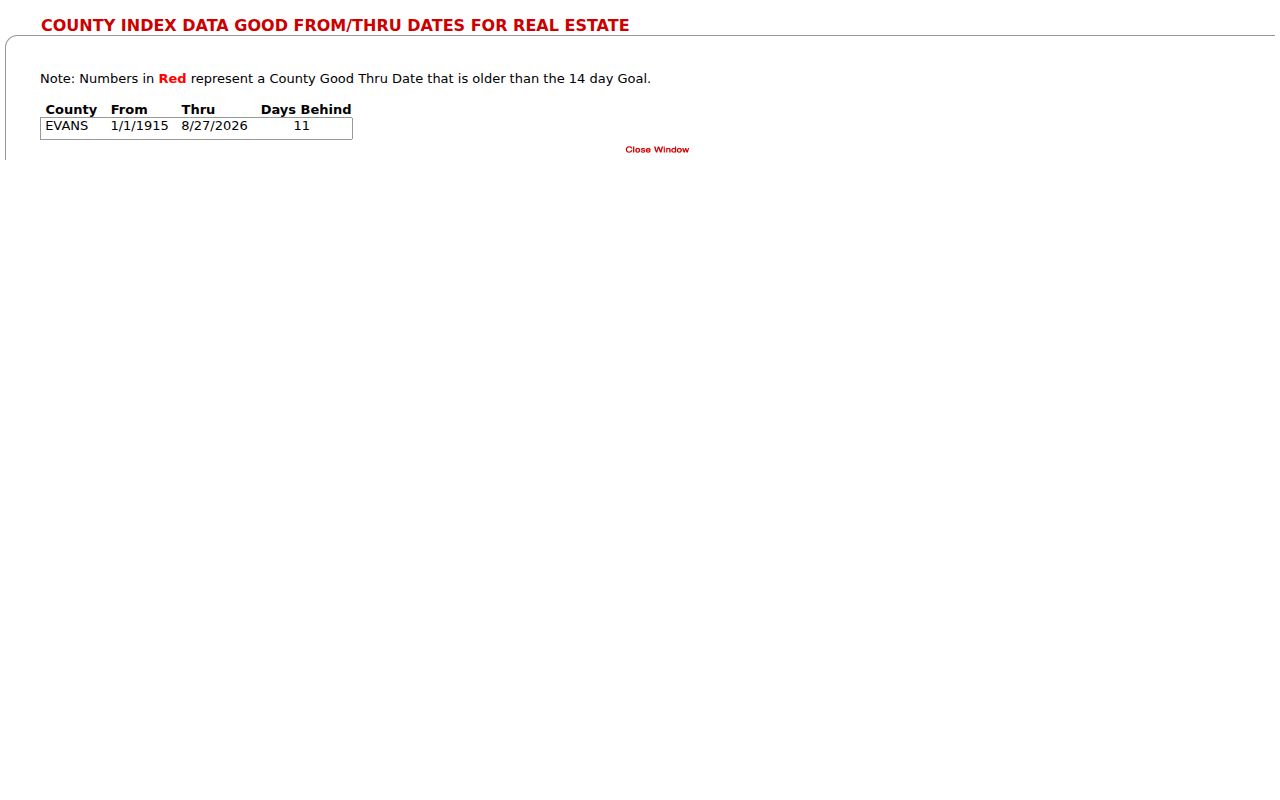
Ask the Clerk about older books, indexes, or microfilm. Evans County was organized in 1914 from Bulloch and Tattnall territory, so older chains may branch into those predecessor counties.
Evans Plat and Book-Page Clues
Local examples show why one identifier is never enough. One county RFP tied parcel H04 009 to “0 Pine Dr,” Groveland Heights Lot 1B, Plat Book 2/Page 157, and Deed Book 194/Pages 307-308. Another tied parcel 040C 007 to 242 Lotts Road, Plat Book 11/Page 237, and Deed Book 309/Pages 432-433. The crosswalk is the lesson. These examples prove nothing about current ownership. Street text should never replace a recorded legal description and plat reference.
Search Evans Liens and Releases Separately
A deed query alone can miss security deeds, assignments, cancellations, releases, easements, covenants, lis pendens, judgments, and tax instruments. Search both direct and reverse parties. Pick the right instrument categories. Then match every result to the land in question. A release must be paired with what it releases. An old lien entry does not establish a current balance, and a deed does not prove every encumbrance was cleared.
No Verified Evans Fraud-Alert Signup
GSCCCA runs a statewide fraud-alert service called FANS. No Evans County enrollment page is published. A statewide webinar does not confirm that local signup works. Recheck current Clerk and GSCCCA sources, watch new filings by the parties that matter, and never trust an Evans signup link built from an unverified statewide reference.
Estate Transfers in Evans Deed Records
A death certificate or probate inventory does not convey land. Start with the Evans Probate Court estate file. Confirm the representative's authority, then search GSCCCA under the decedent, estate, representative, or beneficiary for a deed from estate, trustee's deed, court order, quitclaim, or a related release. Search only names the documents support. Match the instrument to the same parcel. The assessor roll may still carry the decedent or estate name while administration continues, so compare dates instead of assuming a routine update lag. Probate and deed records play separate roles. Together they explain the transfer.
Tax and Foreclosure Deeds Require Context
Sheriff's deeds, trustee's deeds, foreclosure deeds, and tax-sale deeds each point to a legal process. That process may have generated notices, liens, court filings, or later releases. Search the indexed parties before and after the recorded date. Then read the recitals. Read the cross-references too. Do not treat the deed-type label as a complete history. Check the Tax Commissioner for tax-sale context. Look for redemption papers or a later conveyance as well. For court-driven transfers, the local Clerk file may supply a case lead. Georgia Courts eAccess may help as well. The deed page should state what was recorded. Leave its legal effect to a qualified professional.
Check Every Name and Date on an Evans Deed
Names shift shape along a deed chain. One deed may index a man by initials. Another adds a wife as joint grantee. A trust or company can appear under its full legal name in one instrument and a shortened form elsewhere. Search only the defensible variants and note which spelling came from which document. A Georgia business filing can pin down an entity's legal name, but a registered agent is not the landowner unless the deed says so.
Dates do different jobs, so treat them separately. Execution is when the parties signed. Recording is when the Clerk accepted the instrument into the public record. A cited prior deed may predate both. Give each date its own column in your notes. That habit keeps a late-recorded deed from being jammed into the wrong spot in the chain, and it explains why an assessor record may lag behind a fresh conveyance.
Older Evans Land Is an Office-and-Archives Search
Reaching January 1915 in the online index does not finish the chain. Older Evans land takes an office-and-archives search. Ask the Clerk about the years and formats of the earlier direct and reverse indexes, deed books, and microfilm. Georgia Archives finding aids and the Virtual Vault may hold an Evans or predecessor-county collection. Pre-1915 coverage is uneven. Confirm holdings before any trip or copy order.
Plats and legal descriptions bridge periods when addresses changed. Copy the land lot, district, acreage, adjoining owner, road, watercourse, subdivision, and prior book-and-page language exactly. Historical maps help orient a description. They never replace the recorded deed or a modern survey.
Note: Preserve each search date because the GSCCCA good-through date and image access can change after publication.
Record the Evans Deed Citation Completely
Save every useful result in full. Record the indexed party role, full party names, and instrument type. Add the execution date when shown, the recording date, and the book and page or instrument number. Include the county and the image-access status. From the image, copy the property description and every prior deed or plat citation. That builds a repeatable trail for the Clerk counter. It also keeps a same-name deed off the wrong tract.
When the index and image disagree, quote neither from memory. Preserve the screen or note. Obtain the filed document, and ask the Clerk how an indexing error gets corrected. The image is not a title opinion. Still, it is the record that must be read.
Get an Evans County Deed Copy
Find the document in the index first. Images then come through a GSCCCA account, a purchase route, or the Clerk counter. Access comes in premium, limited-use, and single-use tiers. Online images run $0.50 per page, so confirm charges before paying, especially for certification. The citation may already be known. In that case, the GSCCCA book-and-page search goes straight to the book and page.
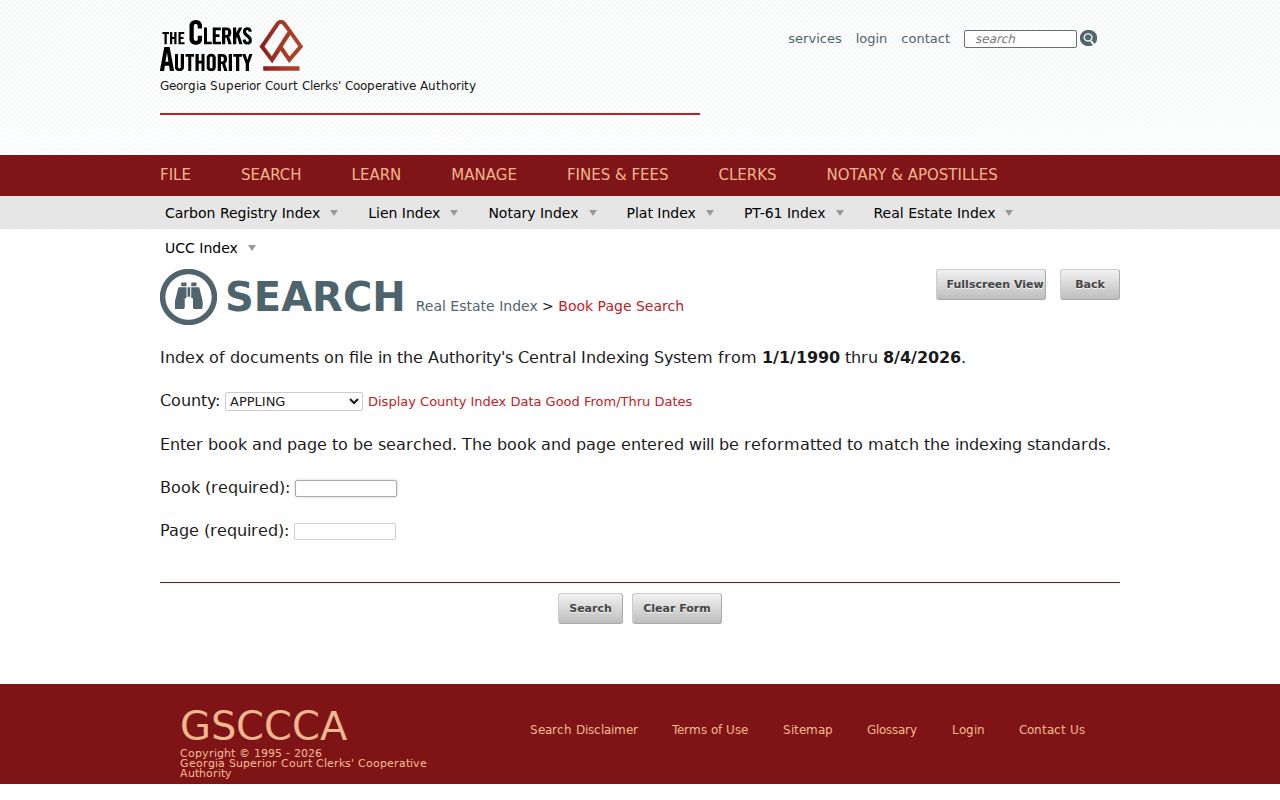
That direct route skips another broad name query, while the Clerk remains the source for certified copies.
Recorded, not guaranteed. Evans County deed records show filed instruments, not every possible unrecorded claim, title defect, or legal conclusion.